How to Protect Your Yard, Home and dog from Fleas, ticks and mosquitoes
Fleas are one of the most common and frustrating problems for pet parents. These annoying, flightless insects deliver bites that are not only painful and uncomfortable for us, but also for our beloved dogs and cats.
Those bites can do more than just itch. Fleas are capable of transmitting parasites and bacteria that may lead to issues such as flea allergy dermatitis (FAD), cat scratch disease (CSD), anemia, and even tapeworms.^1^ Left unchecked, a small flea problem can quickly turn into a household-wide infestation.
Protecting against potential flea infestations is a must for any pet owner—and it’s far easier to prevent an outbreak than it is to eliminate one after it has taken hold.
In this guide, we’ll walk through practical, easy-to-follow steps to help you protect both your home and yard from fleas using a combination of good habits and natural solutions. By putting these strategies in place now, you can dramatically reduce the chance of an infestation and keep these stubborn pests at bay year-round.
How to Protect Your Home From Fleas
When it comes to preventing a flea problem indoors, a clean, clutter-free home is your first line of defense. Your goal is simple: remove as many hiding places as possible and disrupt the flea life cycle at every stage.
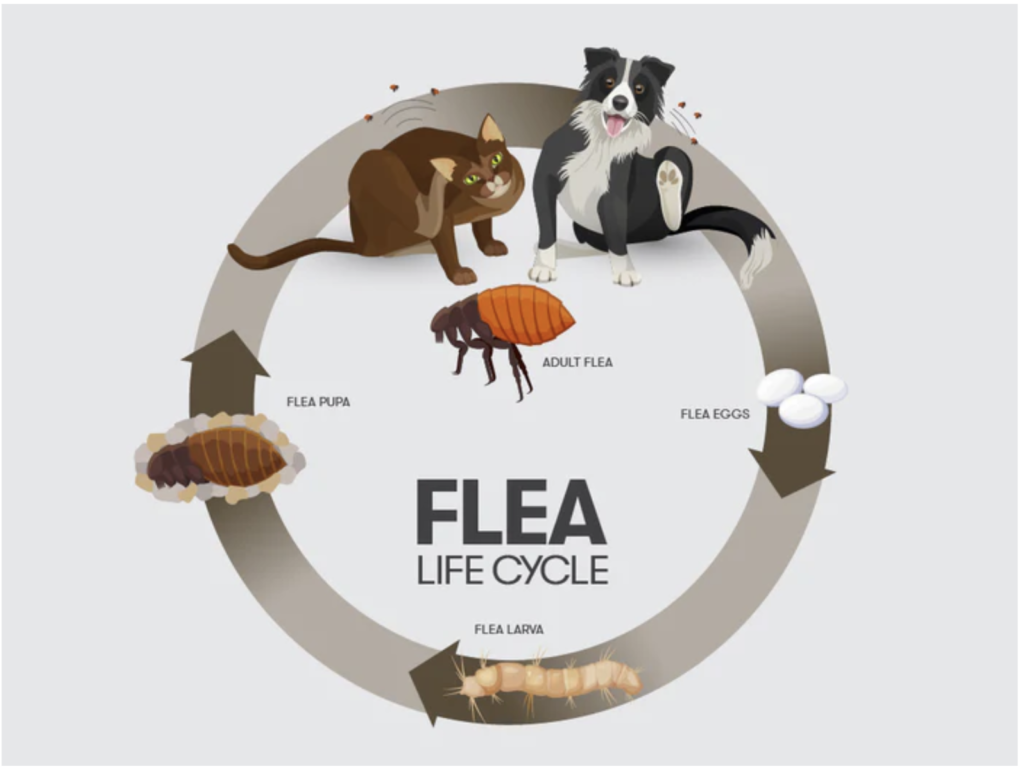
Fleas go through four life stages: egg, larva, pupa, and adult. After hatching from eggs, they enter the larval stage. These tiny, worm-like larvae love dark, undisturbed areas and are excellent at hiding. They are naturally drawn to darkness and avoid bright light.

This is why seemingly harmless habits—like letting dirty laundry pile up on the floor—can actually create the perfect environment for fleas to develop. Piles of clothes, cluttered corners, or rarely cleaned soft furnishings all become prime real estate for larvae.
To make your home less welcoming to fleas:
- Vacuum carpets, rugs, floors, and upholstered furniture regularly, paying extra attention to baseboards, under furniture, and in corners where dust accumulates.
- Use natural cleaning products whenever possible instead of harsh chemical agents, which can be irritating for both pets and humans.
- Wash hard floors frequently, especially in high-traffic pet areas.
Another crucial step is to stay on top of your vacuum maintenance. The last thing you want, after all your hard work cleaning, is for flea eggs to hatch or larvae to pupate inside the warm, dark interior of your vacuum.
Change vacuum bags often, or if you use a bagless vacuum:
- Empty the canister immediately after vacuuming.
- Rinse or wipe the canister and filters as directed by the manufacturer.
- For added protection, you can vacuum up a small amount of flea powder (such as calcium carbonate or borate powder before cleaning out the vacuum. This helps ensure any hitchhiking fleas, eggs, or larvae don’t get a second chance inside your machine.
Soft fabrics are another frontline in your flea-prevention plan. Bed linens, throw blankets, and especially pet beds can all harbor flea eggs and larvae. Make a habit of laundering them regularly using a high-temperature setting to help kill any unwanted passengers.
On top of good housekeeping, consider integrating natural flea-control products specifically designed for in-home use. Many people assume these products are only helpful once you already have an infestation—but prevention is where they truly shine.
You can go a long way toward stopping infestations before they start by incorporating natural, home-safe solutions such as:
- Flea powders designed for use on carpets, upholstery, and pet bedding.
- Plant-based home sprays formulated to repel and kill fleas without leaving behind harsh chemical residues.
Used consistently as part of your regular cleaning routine, these natural products provide an extra protective layer for your home and help keep fleas from gaining a foothold in the first place.
How to Protect Your Yard From Fleas
Your yard is often the starting point for fleas that eventually make their way onto your pets—and then into your home. Fortunately, there’s a lot you can do to make your outdoor space far less attractive to these pests.
Just like indoors, the idea is to remove or reduce the warm, shaded, and undisturbed hiding spots that fleas prefer.
Start with regular yard maintenance:
- Mow grass routinely so it stays at a reasonable height.
- Keep shrubs and bushes trimmed back from walkways, patios, and play areas.
- Remove weeds and overgrowth where moisture and shade can build up.
Beyond grass and shrubs, other common features in a yard can create ideal flea habitats. Piles of leaves, grass clippings, or wood stacks provide warmth, shelter, and shade—all the things fleas love.
To reduce these outdoor hiding places:
- Rake your yard frequently and promptly dispose of leaf litter.
- Rather than leaving a big pile of leaves for play, bag them for collection or move them to a properly located compost heap that pets cannot access.
- Relocate wood piles to areas of the yard where your pets do not typically roam, minimizing the chance that they pick up fleas while exploring.
To further strengthen your outdoor defense, consider treating your yard with a natural flea and tick spray. Products formulated with plant-based ingredients can help reduce flea populations in the environment without the risks associated with harsh synthetic pesticides.
A natural yard spray, used according to the directions and reapplied as needed during peak seasons, serves as a powerful addition to mowing and cleanup. It helps create a safer perimeter around your home so that fewer fleas ever make it onto your pets in the first place.
Dog Protection: Recommend Earth and Paws Natural Collar
For dog owners looking for an easy, effective, and pet-safe layer of protection, we recommend the Earth and Paws natural collar. The Earth and Paws natural collar is formulated with plant-based, non-toxic ingredients designed to help protect dogs from fleas, ticks, mosquitoes and heartworms while minimizing exposure to harsh chemicals. Used as part of a comprehensive prevention plan—alongside regular grooming, home cleaning, and yard maintenance—the Earth and Paws collar offers continuous, long-lasting protection and helps reduce the risk of pests hitching a ride into your home.
Why consider the Earth and Paws natural collar?
- Targeted protection: The collar is designed specifically for dogs and provides continuous, around-the-clock defense against fleas, ticks, mosquitoes and heartworms.
- Natural, pet-friendly formula: Earth and Paws focuses on plant-derived, gentle ingredients that are ideal for pet owners who prefer chemical-free or low-toxicity options.
- Easy to use: Once fitted correctly, the collar requires minimal upkeep—no daily application or messy spot treatments—making it a convenient choice for busy households.
- Complements other prevention steps: The collar works best when combined with indoor cleaning, regular vacuuming, laundering pet bedding, and yard management to interrupt the flea life cycle at multiple points.
A few best practices when using any collar:
- Fit the collar properly so it sits snugly but comfortably against your dog’s neck.
- Check your dog regularly for any signs of skin irritation or sensitivity; discontinue use and consult a veterinarian if you notice an adverse reaction.
- Use the collar as part of a multi-layered prevention plan. No single product can guarantee complete protection—combine the collar with cleaning, yard care, and veterinary guidance for the best results.
Conclusion
The fight against fleas can be won long before an infestation takes hold. Consistent, year-round prevention is far easier—and far more comfortable for your pets and family—than trying to eradicate a full-blown problem once it has spread through your home and yard.
By:
- Keeping your home clean and clutter-free,
- Laundering bedding and pet items routinely,
- Managing yard debris and vegetation,
- And incorporating natural, pet-safe flea control products,
you can significantly reduce the chances of fleas ever becoming an issue.
Natural approaches are an excellent fit for many households because they typically avoid the harsher chemicals that may pose risks to sensitive pets or people. For personalized advice—especially if your pet has existing health conditions, allergies, or you’re dealing with a severe infestation—it’s always wise to speak with your veterinarian. They can help you design a prevention plan that keeps both your pet and your home as flea-free as possible, all year long.